Can an Air Purifier Sharpen Your Focus? New Study Says Maybe
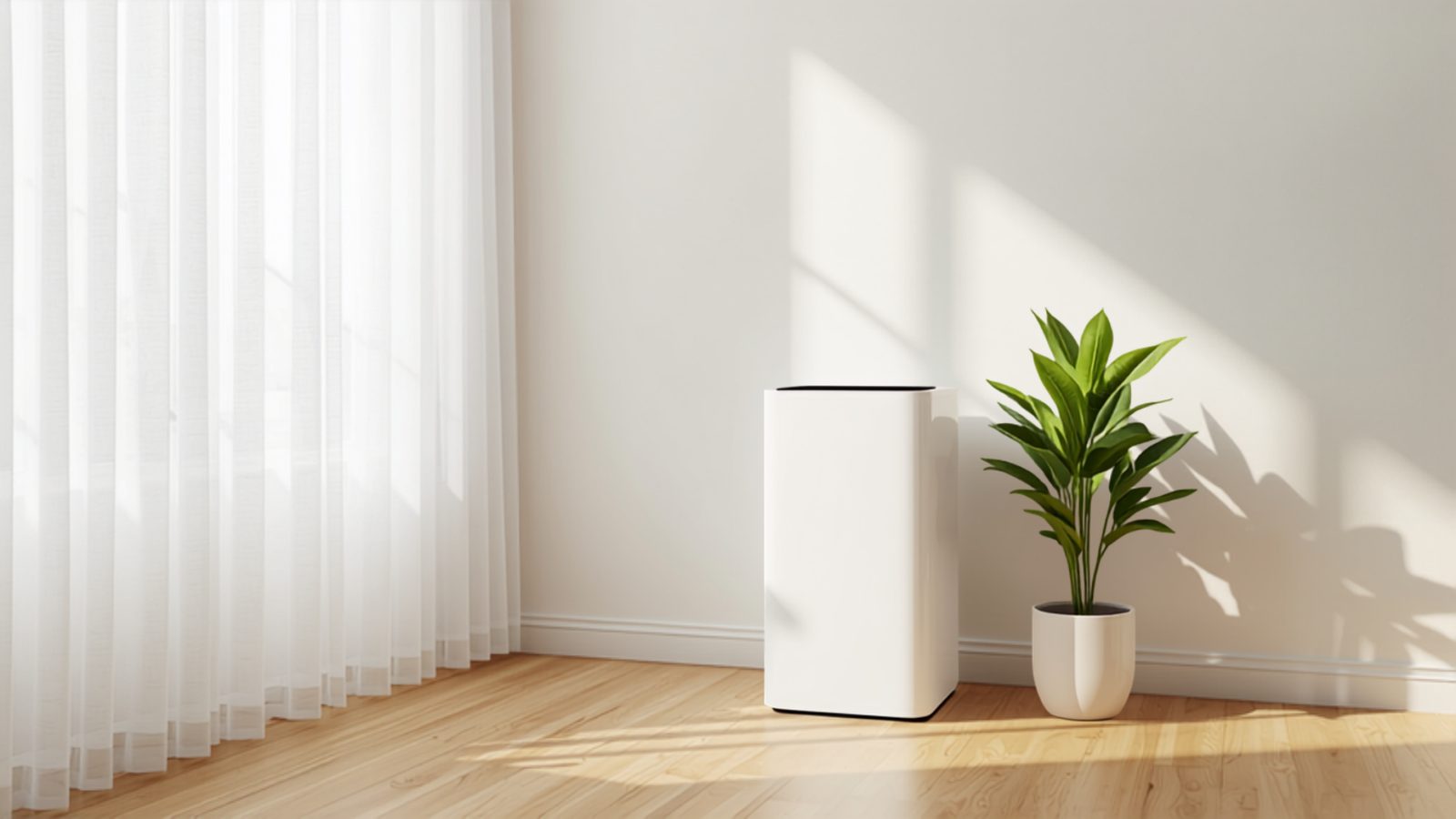
Most of the brain-optimization conversation is about what you put into your body — supplements, caffeine timing, sleep windows. A new randomized trial out of the University of Connecticut and Tufts University points at something almost nobody in this space talks about: the air in the room you're working in. Adults over 40 who ran a HEPA air purifier at home for a month finished a test of mental flexibility meaningfully faster than when they ran a fake purifier instead.
What the Researchers Actually Did
The trial, part of a larger project called HAFTRAP (Home Air Filtration for Traffic-Related Air Pollution), recruited 119 adults ages 30 to 74 living in Somerville, Massachusetts, near Interstate 93 and Route 28 — a corridor with heavy traffic-related air pollution. Using a randomized crossover design, each participant got a real HEPA purifier for one month and a visually identical sham unit (with the filtering disabled) for another month, in random order, with a one-month break in between so neither device's effects would carry over into the other's results.
At the start and end of each month, participants took the Trail Making Test, a standard neuropsychology tool with two parts: Part A measures visual scanning and motor speed by having someone draw lines connecting numbers in order, while Part B adds a mental-flexibility demand by having them alternate between numbers and letters. The findings, led by researchers Nicholas Pellegrino, Doug Brugge, and Misha Eliasziw, were published August 30, 2026 in Scientific Reports.
The Result Was Age-Specific, Not Universal
Across the full group, HEPA filtration didn't produce a significant overall difference in test completion times. But age turned out to be a real moderator of the effect — statistically significant at p = 0.02. Participants 40 and older completed the executive-function portion of the test about 12% faster after the month with a working purifier than after the sham month. The researchers describe that improvement as comparable in size to the cognitive benefit typically seen from increasing daily exercise, which is a useful anchor: it's not a dramatic transformation, but it's not noise either.
Younger participants in the same trial didn't show the same pattern, which is itself informative. It suggests whatever's happening isn't simply "cleaner air makes anyone think faster" — it points toward an age-related vulnerability that filtration may be partly offsetting rather than a universal cognitive enhancer.
Why Executive Function, Specifically
The researchers' working explanation involves white matter — the bundles of insulated nerve fibers that carry signals between brain regions. Prior research has linked traffic-related particulate matter exposure to measurable changes in white matter integrity, and the brain networks most dependent on fast, reliable white-matter signaling happen to govern exactly the skills that improved here: task-switching, mental flexibility, and executive control. HEPA filters remove fine particulate matter that's independently been tied to respiratory, cardiovascular, and neurological conditions, including Alzheimer's and Parkinson's disease risk. That's a plausible mechanism, not a confirmed one — the authors are careful to note they don't yet have direct evidence of the biological pathway, only a correlation between filtration and a specific, testable cognitive outcome.
It's a useful reminder that most "install this thing to help your brain" advice in the wellness space centers on beeping subscription supplements when a cruder physical intervention — do you know what's actually in the air where you spend eight hours a day working — has more empirical backing than most of them.
The Caveats That Keep This From Being a Verdict
This was a small, geographically narrow study: 119 people, all from one traffic-heavy corridor near Boston, which limits how confidently the findings generalize to someone working from a quiet suburb or a different climate with different baseline air quality. The intervention only lasted one month per condition, so nobody knows whether the effect holds, grows, or fades with sustained years-long use. And the age breakdown itself has a wrinkle: fewer than 10 of the 119 participants were over 60, so the "40 and older" finding is really driven mostly by people in their 40s and 50s — the study can't speak with much confidence to what happens for people considerably older than that.
None of that erases the result. A pre-registered, randomized, sham-controlled crossover design with an objective cognitive measure is a stronger evidence base than most claims in the brain-optimization space get. It just means "buy an air purifier and expect a measurable cognitive edge within a month" is a reasonable bet for a specific age group in a polluted area, not a guaranteed outcome for everyone.
If you're already the type who logs interventions to see what actually moves your output — sleep timing, caffeine windows, deep work blocks — this is a cheap, low-effort one to add to the list. Running your own before-and-after with something like our Focus Timer for a few weeks won't replace a controlled trial, but it'll tell you more about your own environment than any general study can.
- The effect was real but age-specific. Adults 40+ saw a 12% speed-up on an executive-function test; younger adults in the same trial didn't show the same pattern.
- Location matters. The benefit showed up most clearly in a high-traffic-pollution corridor — the effect size may be smaller or absent in cleaner-air environments where there's less particulate matter to remove in the first place.
- One month isn't a lifetime. The trial only tested short-term use; whether the benefit compounds, plateaus, or requires continuous use to maintain is still unknown.
- Mechanism is still a hypothesis. White-matter protection is the leading explanation, not a confirmed biological pathway — treat it as a working theory researchers are still testing.
The bigger takeaway may be less about air purifiers specifically and more about where to look for cognitive gains: environmental factors that most people never audit — air quality, light, noise — are increasingly showing up in controlled trials with effect sizes that rival or beat a lot of what gets sold in a supplement bottle.
Frequently Asked Questions
What did the HEPA air purifier study actually find?
Researchers ran a randomized crossover trial with 119 adults, giving each person a real HEPA purifier for a month and a sham (non-filtering) unit for a month, in random order. Adults age 40 and older completed a test of mental flexibility and executive function about 12% faster after the real purifier month than after the sham month. Younger participants showed no meaningful difference.
Does this mean an air purifier will make me sharper right away?
Not necessarily, and not for everyone. The effect only showed up clearly in adults 40 and older, the study only measured one month of use, and fewer than 10 of the 119 participants were over 60, so it says little about older adults specifically. It's a real, statistically significant signal in a well-designed trial, not proof that any purifier will sharpen any brain.
Why would cleaner air improve executive function specifically?
The leading hypothesis involves white matter, the wiring that carries signals between brain regions. Traffic-related particulate matter has been linked in prior research to white matter changes, and the brain circuits most dependent on that wiring happen to govern mental flexibility and task-switching — the exact domains where this study saw improvement. Researchers are upfront that the mechanism isn't confirmed yet.

FocusWaveHub Editorial Team
Editorial & Research Team
The FocusWaveHub editorial team synthesizes peer-reviewed research on cognitive performance, attention science, and evidence-based productivity. About our editorial approach →